TRANSFORMATION OF USER EXPERIENCE IN DIGITAL BANKING ECOSYSTEMS
Ural State University of Economics
Bachelor’s Degree
Abstract
The article examines the transformation of user experience in digital banking ecosystems as a combined technological, organizational and financial process. The relevance of the study is determined by the rapid normalization of online and mobile banking, the expansion of open banking, the increasing role of artificial intelligence in customer interaction, and the shift from isolated banking applications to platform-based ecosystems. The research problem is that digital convenience alone no longer explains the quality of banking experience: customers evaluate banks through the continuity of journeys, the transparency of data use, the reliability of payments, the relevance of personalized offers, and the clarity of financial decisions embedded in digital interfaces. The purpose of the article is to systematize the key directions of user experience transformation in digital banking ecosystems and to show how interface architecture, data-driven personalization, trust mechanisms and investment transparency jointly shape customer value. The study uses a qualitative synthesis of recent industry data, peer-reviewed literature and applied publications. It is shown that sustainable user experience is formed at the intersection of omnichannel design, modular architectures, consent-based analytics, security controls and explanatory financial tools. Particular attention is paid to the role of portfolio immunization logic in digital wealth and pension modules, where risk disclosure becomes part of the experience rather than an external compliance requirement.
Keywords: banking ecosystem, digital banking, financial resilience, microfrontend architecture, open banking, personalization, portfolio immunization, user experience
Category: 08.00.00 Economics
Article reference:
Rudnev M.I. Transformation of user experience in digital banking ecosystems // Modern scientific researches and innovations. 2026. № 8 [Electronic journal]. URL: https://web.snauka.ru/en/issues/2026/08/105010
 View this article in Russian
 Introduction
Digital banking has moved from an auxiliary channel to the main environment in which customers interact with financial institutions. This transition is visible in the scale of internet banking use: in the European Union, the share of people aged 16-74 using internet banking increased from 54.6% in 2019 to 67.2% in 2024 [1]. At the same time, the competitive field has expanded beyond banks to include fintech firms, payment platforms, digital wallets and non-financial ecosystems. As a result, user experience (UX) in banking is no longer limited to interface usability; it includes the ability of the ecosystem to provide continuity, security, transparency and relevant financial guidance across multiple services [2, 3]. The research problem is determined by the mismatch between the complexity of digital banking ecosystems and the simplicity expected by customers. A single customer journey may include authentication, account aggregation, payment initiation, card management, credit scoring, investment recommendations and customer support. If these functions are technically fragmented, the interface may appear convenient while the underlying experience remains inconsistent. This is especially important in open banking and open finance, where customer-permissioned data sharing increases product choice but also raises requirements for consent management, risk explanation and trust [4, 5].
The purpose of this article is to identify the main directions of UX transformation in digital banking ecosystems and to determine how modular interface architecture, data-driven personalization, trust mechanisms and financial decision support shape customer value.
Digital channels and ecosystem-based user journeys
The transformation of digital banking begins with a change in the object of design. Earlier digitalization projects mainly transferred branch operations into online and mobile channels. In mature digital ecosystems, however, the object of design is the entire journey: a customer discovers a product, compares alternatives, passes onboarding, receives personalized guidance, uses payments or cards, and later enters investment, savings or credit scenarios. Industry evidence shows that retail banks increasingly compete not through the mere availability of a mobile application, but through seamless, personalized and cross-industry experiences supported by mobile banking, artificial intelligence (AI), data analytics and ecosystem collaboration [6]. This shift changes the role of architecture. A large banking interface can no longer be treated as a single monolithic front end because payment modules, card journeys, wealth products, support chats and partner services evolve at different speeds. Microfrontend architecture addresses this problem by decomposing customer-facing applications into independently owned interface domains. In financial applications, this approach is relevant because it allows separate teams to improve onboarding, transaction history, investment dashboards or support flows without destabilizing the whole digital bank [7]. The architecture of UX transformation is presented in Figure 1.
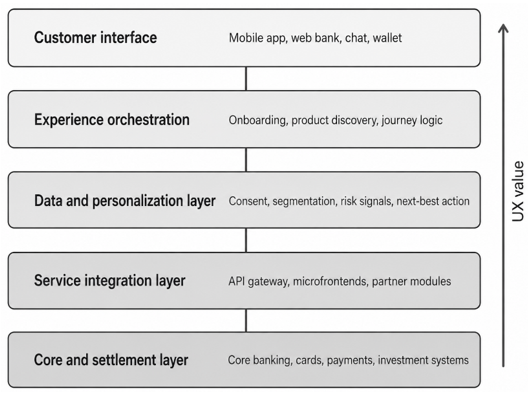
Figure 1. Layered model of user experience transformation in a digital banking ecosystem
Figure 1 shows that visible UX is produced by several layers that must operate together. The customer interface is only the upper layer. Its quality depends on the orchestration of journeys, the data and personalization layer, the integration of internal and partner services, and the reliability of core and settlement systems. Therefore, a digital banking ecosystem should be evaluated not only by screen design but also by the stability of service boundaries and data contracts.
The layered model also explains why ecosystem UX becomes a governance issue. When a bank adds partner services or new financial modules, the user should not experience fragmentation in navigation, terminology, identity verification or support logic. Modular architectures are useful only when they are combined with common design standards, observability, accessibility requirements and shared risk controls.
The evidence base for this transformation can be summarized through several interrelated dimensions. Table 1 presents the main analytical dimensions used in the article and links them to UX implications.
Table 1. Evidence base for UX transformation in digital banking ecosystems [1, 5-9]
|
Analytical dimension |
Observed tendency |
UX implication |
| Digital adoption | Internet banking became mainstream in the EU | Digital banking must support routine, high-frequency tasks with low friction |
| Open banking and data access | Permissioned data sharing supports fintech entry and product comparison | Consent, data portability and explanation become part of trust design |
| Omnichannel engagement | Banks prioritize consistent interaction across channels | The customer journey is evaluated across mobile, web, call center and branch handoffs |
| Component-based architecture | Microfrontend logic decomposes large financial interfaces into owned modules | Independent release cycles reduce delays in improving customer-facing journeys |
| Algorithmic personalization | Models tailor messages and offers to behavioral context | Personalization must remain auditable and non-manipulative |
| Investment transparency | Duration, maturity and scenario information become part of the interface | Risk visualization and suitability controls support informed decisions |
Table 1 demonstrates that UX transformation is not reducible to one technological factor. Adoption data create scale pressure; open banking increases customer choice; microfrontends and application programming interfaces support technical flexibility; AI and marketing algorithms make interaction more contextual; and investment modules require transparent risk explanation. This structure is important for banks that aim to preserve the primary customer relationship. If a digital ecosystem contains many services but does not provide a coherent journey, the platform may increase functional complexity without increasing perceived value. Consequently, ecosystem maturity should be measured through customer outcomes: task completion, trust, perceived control, explanation quality and continuity between channels.
Personalization, trust and data-driven orchestration
Personalization has become one of the central mechanisms through which digital banking ecosystems transform UX. In this context, personalization includes not only marketing messages but also product prioritization, financial nudges, fraud warnings, transaction categorization, spending insights and support routing. Algorithmic marketing can increase the relevance of customer interaction when it is based on a comprehensive analysis of behavioral, demographic and psychographic characteristics, audience segmentation, appropriate channel selection and timely message personalization [8, 10]. However, it also requires clear limits because opaque recommendations may reduce trust and produce perceptions of manipulation. Research on continuous trust in mobile banking indicates that trust is sustained through repeated interaction rather than formed only at adoption. Security, perceived usefulness, reliability and institutional credibility influence whether customers continue to use mobile banking applications [11]. This means that ecosystem UX must be designed as a long-term relationship mechanism: the system should remain predictable during routine operations and sufficiently transparent when sensitive decisions are made, such as credit offers, card limits or investment recommendations.
The relationship layer of a banking ecosystem may extend beyond the bank’s own application. In the broader B2C environment, social platforms support repeated interaction, personalized communication and audience engagement, thereby contributing to trust and long-term customer loyalty [12]. For financial institutions, such platforms should therefore complement the core customer journey rather than function as isolated promotional channels. Open banking strengthens this requirement. Empirical evidence shows that customer data access policies support fintech entry and enable consumers and small and medium-sized enterprises to access advice and credit through new providers [5]. For banks, this creates both a competitive threat and an opportunity. The threat arises because the customer can move data and attention to a competing interface; the opportunity arises because the bank can use consent-based data integration to offer more complete financial management inside its own ecosystem.
The scale of digital adoption is illustrated in Figure 2, which presents the increase in EU internet banking use between 2019 and 2024.
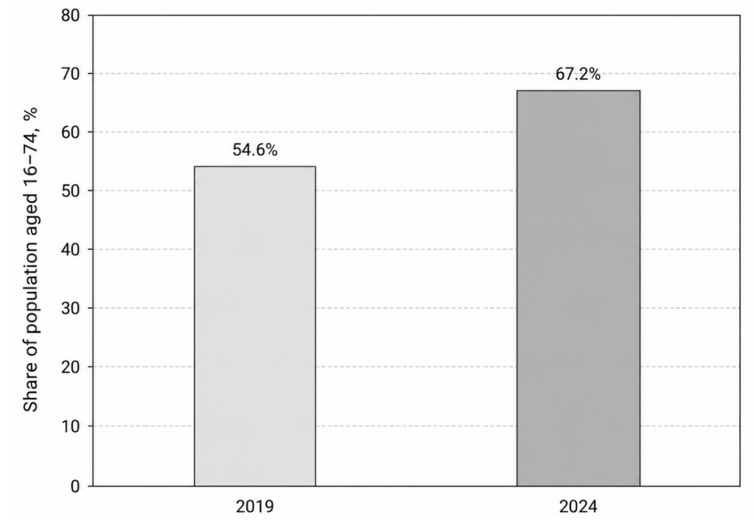
Figure 2. Internet banking use in the European Union, 2019 and 2024
Figure 2 shows a 12.6 percentage point increase in internet banking use over five years. This growth means that digital banking has become a mass interaction environment rather than a specialized channel for technologically advanced users. As the customer base becomes broader, UX design must account for different levels of digital literacy, accessibility needs and risk perception. The same trend increases the cost of interface failures. A delayed authentication process, an unclear consent screen or an irrelevant product recommendation affects not only individual satisfaction but also trust in the ecosystem. For this reason, data-driven orchestration should be connected with governance mechanisms: model monitoring, explainability, privacy-by-design, accessibility testing and transparent complaint resolution.
Table 2 summarizes the main UX layers that require managerial and technical control when banking ecosystems use personalization and data-driven orchestration.
Table 2. UX layers and operational controls in digital banking ecosystems
|
UX layer |
Design requirement |
Risk if ignored |
Operational control |
| Interface convenience | Fast onboarding, visible status, accessible navigation | Abandonment and migration to fintech alternatives | Journey analytics, service-level monitoring |
| Contextual personalization | Consent-based segmentation and relevant product prompts | Intrusive offers, bias and weak customer acceptance | Model governance and content approval |
| Trust and security | Strong authentication, transparent data use, incident communication | Loss of confidence and reduced digital adoption | Fraud monitoring and privacy controls |
| Financial decision support | Scenario-based risk disclosure and maturity logic | Misunderstanding of long-term products and portfolio risk | Suitability rules, stress testing and rebalancing explanations |
Table 2 indicates that personalization should be treated as a controlled process rather than a purely commercial tool. The same data that allow a bank to make a relevant offer can also expose customers to excessive persuasion, discriminatory outcomes or unclear product logic. Therefore, the experience layer should be connected with risk, legal and compliance controls. The banking ecosystem becomes more resilient when each layer has measurable controls. For example, journey analytics may identify onboarding friction, while model governance can test whether product recommendations are stable and fair across customer groups. In this interpretation, UX management is not a design department function only; it is a cross-functional mechanism linking product management, technology, risk management and customer protection.
Financial resilience and investment transparency as components of UX
Digital banking ecosystems increasingly include services that go beyond payments and account management. Savings, brokerage, pension, insurance and wealth modules are now embedded into the same interface through which customers perform everyday banking operations. This expansion changes the meaning of UX: the interface must not only simplify transactions but also help customers understand financial consequences. In investment and pension scenarios, a convenient interface without risk explanation may increase behavioral mistakes rather than improve customer value. The analysis of portfolio immunization and debt maturity management is especially relevant for this part of the ecosystem. Duration-based matching of assets and liabilities helps reduce interest rate risk, while hybrid strategies using derivatives and active management can increase adaptability under volatile market conditions [9]. The same source also shows the limits of classical immunization: it requires rebalancing, reliable data, transaction cost control and careful treatment of liquidity, credit and market risks.
For a digital banking ecosystem, these findings have a direct UX implication. If a bank offers long-term savings or pension products through a mobile interface, the customer should see not only the expected return but also the maturity structure, the sensitivity of value to interest rate changes, the logic of rebalancing and the conditions under which the strategy may become less effective. The example of a portfolio with defensive, liquid and income segments and an expected total return of 13.12% illustrates how product design can be translated into a customer-facing explanation model [9].
This logic can be expressed as a transformation from product disclosure to experience disclosure. The customer does not need a full actuarial model inside the interface, but the ecosystem should provide understandable layers of explanation: portfolio objective, risk drivers, duration or maturity profile, stress scenarios, historical limitations and suitability restrictions. Such explanation connects financial resilience with trust and reduces the gap between regulatory disclosure and actual customer comprehension. The role of payment infrastructure is similar. Current payment systems are becoming more diverse, with account-to-account payments, instant payments, tokenized solutions and platform-based rails developing simultaneously [13, 14]. For customers, the technical architecture of payment rails is invisible, but the perceived experience depends on speed, transparency, cost, recoverability and fraud protection. Therefore, payment interoperability and financial decision support should be treated as two sides of the same UX transformation: both convert complex infrastructure into understandable customer outcomes.
Conclusion
The transformation of UX in digital banking ecosystems is a multidimensional process that combines interface design, modular architecture, consent-based data use, trust mechanisms and financial explanation. The analysis confirms that the digital bank is no longer only an application for remote transactions. It is becoming an ecosystem in which payments, cards, open banking, personalization, support, savings and investment services are integrated into continuous customer journeys. The study shows that sustainable UX depends on the coherence of several layers. Microfrontend and API-based architectures support faster improvement of customer-facing services, but they require common design rules and service governance. Personalization improves relevance, but only when it is auditable, consent-based and connected with model risk controls. Open banking expands customer choice, but it also makes trust, data portability and transparent consent central elements of experience. A separate conclusion concerns financial resilience. When banking ecosystems include long-term savings, pension or investment products, UX must incorporate risk explanation. Portfolio immunization logic, duration matching and maturity management should not remain hidden technical or investment concepts. In digital channels, they can be translated into transparent explanations, scenario views and suitability checks. Thus, the quality of a digital banking ecosystem is determined not only by convenience but also by its ability to make complex financial decisions understandable, controlled and trustworthy.
References
- Eurostat. Digital society statistics at regional level. Use of internet banking // European Commission. URL: https://ec.europa.eu/eurostat/statistics-explained/index.php?title=Digital_society_statistics_at_regional_level (accessed: 29.06.2026).
- Kovalevskyi K. The impact of digital platforms on the transformation of user experience in the banking sector // Professional Bulletin. Information Technology and Security. 2025. №4/2025. P. 66-73.
- Chauhan S., Akhtar A., Gupta A. Customer experience in digital banking: a review and future research directions // International Journal of Quality and Service Sciences. 2022. Vol. 14. №2. P. 311-348. https://doi.org/10.1108/IJQSS-02-2021-0027
- Schreieck M., Huang Y., Kupfer A., Krcmar H. The effect of digital platform strategies on firm value in the banking industry // Journal of Management Information Systems. 2024. Vol. 41. №2. P. 394-421. https://doi.org/10.1080/07421222.2024.2340825
- Babina T., Bahaj S., Buchak G., De Marco F., Foulis A., Gornall W., Mazzola F., Yu T. Customer data access and fintech entry: early evidence from open banking // Journal of Financial Economics. 2025. Vol. 169. P. 103950. https://doi.org/10.1016/j.jfineco.2024.103950
- Capgemini Research Institute. World Retail Banking Report 2025: Attract, engage, and delight. URL: https://www.capgemini.com/wp-content/uploads/2025/03/WRBR_Final_25_weblock-version.pdf (accessed: 29.06.2026).
- Kovalevskyi K. Designing microfrontend architectures for next-generation financial applications // Slovak international scientific journal. 2026. №107. P. 23-28.
- Yesbolova A.N. Algorithmic marketing and customer experience personalization // Professional Bulletin: Economics and Management. 2025. №2. P. 45-50.
- Zharmagambetov E. Portfolio immunization and strategies for managing debt maturities // Innovation & Investment. 2025. №1. P. 452-455.
- Mudrov M. Development and implementation of strategies for promoting advertising campaigns in the digital environment based on a comprehensive analysis of target audience characteristics // International Journal of Research in Commerce and Management Studies. 2026. Vol. 8(1). P. 266-274. https://doi.org/10.38193/IJRCMS.2026.8123
- Che M., Say S.Y.A., Yu H. et al. Investigating customers' continuous trust towards mobile banking apps // Humanities and Social Sciences Communications. 2023. Vol. 10. P. 960. https://doi.org/10.1057/s41599-023-02483-3
- Mudrov M. The use of social platforms for building long-term customer relationships in the B2C segment // European Journal of Management and Marketing Studies. 2026. Vol. 11(1). P. 88-96. https://doi.org/10.46827/ejmms.v11i1.2183
- Committee on Payments and Market Infrastructures. Harmonised ISO 20022 data requirements for enhancing cross-border payments. Bank for International Settlements. 2025. URL: https://www.bis.org/cpmi/publ/d230.pdf (accessed: 29.06.2026).
- McKinsey & Company. The 2025 Global Payments Report: Competing systems, contested outcomes. URL: https://www.mckinsey.com/industries/financial-services/our-insights/global-payments-report (accessed: 29.06.2026).
All articles of author «author98211»
© If you have found a violation of copyrights please notify us immediately by e-mail.