ARCHITECTURE OF INTERACTIVE MEDIA PLATFORMS AS A DRIVER OF USER ENGAGEMENT AND MONETIZATION
Moscow Institute of Physics and Technology
Phystech School of Applied Mathematics and Computer Science
Abstract
This article examines the architecture of interactive media platforms as a key factor influencing user engagement and the efficiency of monetization mechanisms in digital services. Modern media platforms operate as complex distributed systems integrating content management subsystems, user data processing pipelines, personalization algorithms, and monetization tools. Particular attention is given to the architectural role of recommendation systems and analytical data processing pipelines that enable adaptive content distribution based on behavioral user signals. The study demonstrates that the architectural integration of behavioral analytics and monetization modules creates a closed feedback loop in which personalized content delivery stimulates user engagement while the resulting behavioral data is used to optimize advertising placement and subscription strategies. Using examples of major digital platforms, key engagement indicators and their relationship with the economic performance of platform ecosystems are analyzed. The findings indicate that architectural solutions based on scalable microservice infrastructures, machine learning systems, and real-time analytics pipelines significantly improve engagement metrics and enhance the sustainability of digital media business models. The results of the study may be applied in the design and optimization of digital platform architectures aimed at increasing user activity, improving personalization mechanisms, and ensuring long-term economic efficiency of interactive media ecosystems.
Keywords: behavioral data analytics, digital monetization, digital platform architecture, interactive media platforms, recommendation systems, user engagement
Category: 05.00.00 Technical sciences
Article reference:
Kupich A.S. Architecture of interactive media platforms as a driver of user engagement and monetization // Modern scientific researches and innovations. 2026. № 5 [Electronic journal]. URL: https://web.snauka.ru/en/issues/2026/05/104696
 View this article in Russian
 Introduction
The rapid development of digital technologies has fundamentally transformed the architecture of contemporary media platforms. Modern online ecosystems increasingly rely on interactive mechanisms that enable continuous communication between users, content providers, and recommendation systems. Platforms such as YouTube, TikTok, and Netflix demonstrate how architectural decisions directly influence the intensity of user interaction, the duration of sessions, and ultimately the economic sustainability of digital services [1]. In this context, the structure of backend infrastructure, recommendation algorithms, and data processing pipelines becomes a key factor determining both platform scalability and its ability to generate revenue.
Interactive media platforms (IMPs) represent complex distributed systems integrating content delivery networks, data analytics modules, personalization algorithms, and monetization subsystems [2]. Their architecture is designed to maintain high throughput under heavy loads while simultaneously analyzing user behaviour in real time. Behavioral signals generated by interactions such as viewing, commenting, sharing, and reacting are continuously collected and processed. These signals serve as the foundation for adaptive recommendation models that personalize content flows and reinforce user engagement patterns.
Despite the growing economic significance of IMPs, the relationship between architectural design and monetization efficiency remains insufficiently systematized in academic literature. While many studies analyze recommendation algorithms or advertising models independently, fewer works examine how architectural structures integrate these mechanisms into a unified operational framework. The purpose of this study is to analyze the architectural principles of interactive media platforms and to determine how specific architectural components influence user engagement and monetization efficiency.
Main section
Interactive media platforms operate within highly dynamic digital environments where system performance directly affects user retention. A typical platform architecture includes several interrelated subsystems: the content management layer, recommendation services, analytics infrastructure, and monetization modules. These components interact through data pipelines that continuously process user behaviour signals. The architectural complexity of such systems increases as platforms scale to millions of simultaneous users, requiring distributed microservice infrastructures and high-availability databases.
One of the central architectural mechanisms influencing engagement is the recommendation system. Platforms such as TikTok rely heavily on real-time machine learning models that analyze viewing behaviour, interaction frequency, and session duration. These systems dynamically adjust content feeds to maintain continuous user interest. The architecture supporting such mechanisms typically includes event-stream processing systems, feature engineering pipelines, and model inference services deployed across cloud infrastructure [3].
Another important component of IMP architecture is the integration of monetization services within the content delivery workflow. Advertising placement algorithms, subscription management systems, and payment processing services operate as independent modules connected through application programming interfaces (APIs). For example, the architecture of YouTube integrates advertising auctions with recommendation algorithms, enabling targeted advertising based on behavioral signals [4].
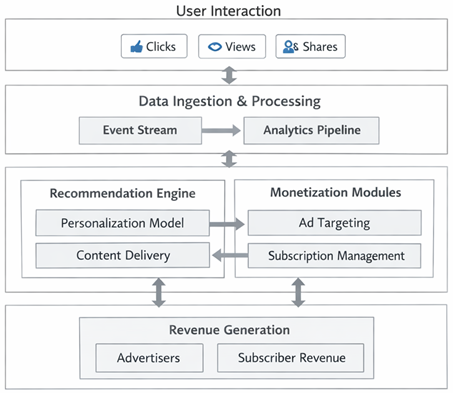
Figure 1. Architectural structure of an interactive media platform integrating engagement and monetization mechanisms
Figure 1 illustrates a generalized architecture of an interactive media platform. The system begins with the user interaction layer, where behavioural signals such as clicks, views, and reactions are generated. These signals enter the data ingestion layer and are processed through analytics pipelines. The processed data feeds into recommendation engines and monetization modules.
The architecture forms a continuous feedback loop. Recommendation systems influence user behaviour by presenting personalized content, which subsequently generates new behavioural signals. Monetization modules utilize the same behavioural datasets to optimize advertising placement and subscription strategies [5]. As a result, engagement and revenue generation become tightly interconnected processes within a unified architectural framework.
Empirical data from major digital platforms confirm that engagement metrics strongly correlate with monetization outcomes. Platforms that implement advanced personalization and scalable data processing infrastructures demonstrate significantly higher revenue efficiency compared to systems with static content delivery models [6].
Table 1. Key engagement and monetization indicators of selected media platforms (2024-2025)
|
Platform |
Monthly active users (approx.) |
Average session duration |
Primary monetization model |
| TikTok | 1.6 billion | ~34 minutes/day | Advertising, creator marketplace |
| YouTube | 2.7 billion | ~28 minutes/day | Advertising, subscriptions |
| Netflix | 260 million subscribers | ~2 hours/day streaming | Subscription |
| 2.0 billion | ~30 minutes/day | Advertising, brand partnerships |
Table 1 presents aggregated indicators illustrating the relationship between user engagement and monetization models across several major platforms. The data show that high session duration and large user bases provide favorable conditions for both advertising revenue and subscription-based business models.
The architectural capabilities of a platform strongly influence these metrics. Systems designed with scalable microservices and adaptive recommendation pipelines are able to continuously refine user experiences. Consequently, engagement metrics such as viewing time and interaction frequency increase, strengthening the economic performance of the platform.
Personalization algorithms and behavioral data processing
The effectiveness of interactive media platforms largely depends on the ability to process behavioural data in real time. Modern recommendation systems rely on large-scale machine learning pipelines capable of analysing billions of interaction events daily. These pipelines consist of several stages including event collection, feature extraction, model training, and inference.
Platforms such as Netflix employ complex hybrid recommendation systems combining collaborative filtering, content-based filtering, and deep learning models. The architecture supporting these systems integrates distributed data storage, real-time processing frameworks, and scalable machine learning services deployed across cloud environments [7].
The personalization process begins with the collection of interaction events. Each user action generates a behavioural signal recorded within event-stream processing systems. These signals are aggregated into feature sets that represent user preferences and content attributes. Machine learning models then evaluate these features to produce personalized content recommendations.
The architectural design of the data processing pipeline directly affects system responsiveness and recommendation quality. Low-latency infrastructures enable real-time updates to user profiles, allowing recommendation systems to adapt immediately to behavioural changes. As a result, the platform maintains high engagement levels by continuously presenting relevant content.
Another important aspect of personalization architecture is experimentation infrastructure. Large platforms frequently conduct A/B tests to evaluate the impact of new recommendation models or interface features. These experiments require specialized architecture capable of segmenting user groups and analysing behavioural responses without disrupting the stability of the production system.
Monetization mechanisms within platform architecture
Monetization in interactive media platforms is closely connected to engagement architecture. Advertising networks, subscription management services, and creator economy tools operate as integrated subsystems within the broader platform infrastructure. These modules rely heavily on behavioural analytics and recommendation outputs.
Advertising-based monetization remains the dominant model for many social platforms. In systems such as YouTube and Meta Platforms advertising placement algorithms evaluate user preferences, demographic indicators, and engagement patterns. The architectural integration of advertising auctions with content delivery ensures that promotional materials are displayed in contexts where they are most likely to generate interaction.
Subscription models represent another architectural approach to monetization [8]. Platforms such as Netflix and Spotify prioritize content personalization and recommendation accuracy to increase perceived value for subscribers. In this case, engagement directly influences subscription retention and long-term revenue stability.
An important architectural feature of modern interactive media platforms is the ability to integrate monetization mechanisms directly into the content distribution infrastructure. In contrast to traditional media systems, where revenue generation mechanisms often operate independently from content delivery, digital platforms embed monetization modules into the same technological environment that manages user interaction and recommendation processes. This architectural integration enables platforms to dynamically adjust monetization strategies based on real-time behavioral data and engagement metrics.
Another significant aspect of platform architecture is the use of data-driven decision models to optimize monetization efficiency. Machine learning algorithms analyze user behavior patterns, content consumption intensity, and interaction frequency in order to identify the most effective moments for advertising placement or subscription conversion. As a result, monetization processes become adaptive and personalized, which increases both the relevance of advertising content and the probability of user interaction with commercial offers. The effectiveness of such architectural approaches can be observed in large-scale digital platforms where engagement indicators and monetization models demonstrate a strong interdependence.
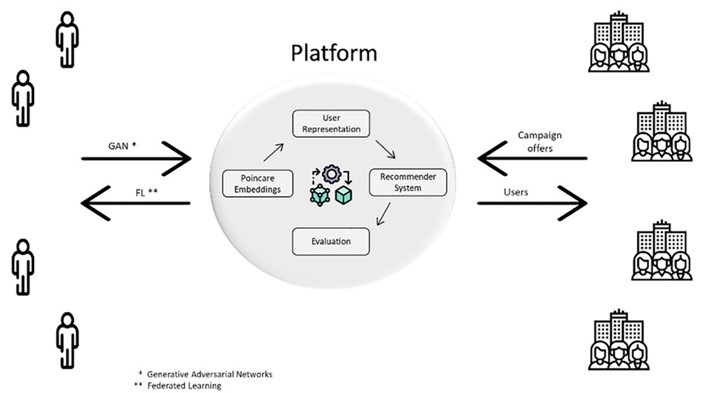
Figure 2. Feedback loop between user engagement mechanisms and platform monetization systems [9]
Figure 2 demonstrates how behavioural data collected from user interactions feeds both recommendation engines and monetization algorithms. The architecture forms a cyclical system in which personalized content increases engagement, engagement generates behavioural data, and this data improves both recommendation accuracy and advertising targeting.
Such feedback loops represent the central architectural mechanism that transforms user activity into economic value. By continuously analysing behavioural signals, platforms refine their monetization strategies while maintaining user satisfaction and platform relevance.
From an architectural perspective, successful media platforms implement tightly integrated ecosystems where data analytics, recommendation algorithms, and monetization services operate within a unified infrastructure. This integration ensures both high engagement levels and sustainable economic performance in competitive digital markets.
Conclusion
The study demonstrates that the architecture of interactive media platforms plays a decisive role in shaping user engagement and determining the effectiveness of platform monetization models. Modern media ecosystems function as complex distributed systems in which recommendation engines, data processing pipelines, and monetization modules operate as interconnected components. Their integration enables platforms to transform behavioural signals generated by user interactions into actionable analytical insights that directly influence content distribution and revenue generation.
The analysis confirms that personalization algorithms and scalable data infrastructures significantly enhance user engagement indicators, including session duration, interaction frequency, and content consumption intensity. Platforms implementing advanced recommendation architectures and real-time analytics pipelines are able to continuously adapt to behavioural changes and maintain a high level of user involvement. This adaptive capability creates favorable conditions for the implementation of both advertising-based and subscription-based monetization strategies.
The findings highlight that the economic sustainability of interactive media platforms depends not only on the quality of content but also on the efficiency of the architectural framework supporting user interaction and data processing. Future development of digital media ecosystems will likely focus on deeper integration of machine learning systems, behavioural analytics, and monetization mechanisms within unified platform architectures. Such integration will allow platforms to further increase engagement levels while maintaining long-term economic stability.
References
-
Malikov A. Effective marketing strategies for business development: from traditional methods to digital platforms // International Journal of Humanities and Natural Sciences. 2024. Vol. 12-4 (99). P. 208-213.
-
Aluev A. Optimizing the performance of node.js services under high network load // Professional Bulletin: Information Technology and Security. 2026. №1. P. 3-9.
-
Andreev G. Development of visual editors for digital media: architecture, website integration, and advertising potential of interactive content // Professional Bulletin: Information Technology and Security. 2025. No2/2025. P. 42-48.
-
Wang Y. Research on the construction of an interactive design platform based on neural networks and precision push algorithms // International Journal of Cognitive Informatics and Natural Intelligence. 2025. DOI: https://doi.org/10.4018/IJCINI.383949
-
Nuzhdin D. Architecture, UX, and personalization algorithms of digital platforms for personal branding and business communications // International Journal of Engineering in Computer Science. 2025. Vol. 7(2B). P. 180-185. DOI: 10.33545/26633582.2025.v7.i2b.215
-
Andreev G. Development of native advertising formats for media: technical implementation and impact on monetization metrics // Universum: technical sciences: electron. scientific journal. 2025. №8(137). P. 34-39.
-
Harichandan L., Nayak S.K., Lenka S. Models, challenges and applications of recommender systems in digital platforms // Journal of Engineering Science and Technology Review. 2025.
-
Ustinova V. Dynamic pricing strategies in platform economies under conditions of algorithmic competition // Cold Science. 2025. №22. P. 53-60.
-
Kolesnikova D. The OSDM model as a tool for standardizing architectural solutions in complex IT products // Cold Science. 2026. №25. P. 35-46.
All articles of author «author98211»
© If you have found a violation of copyrights please notify us immediately by e-mail.